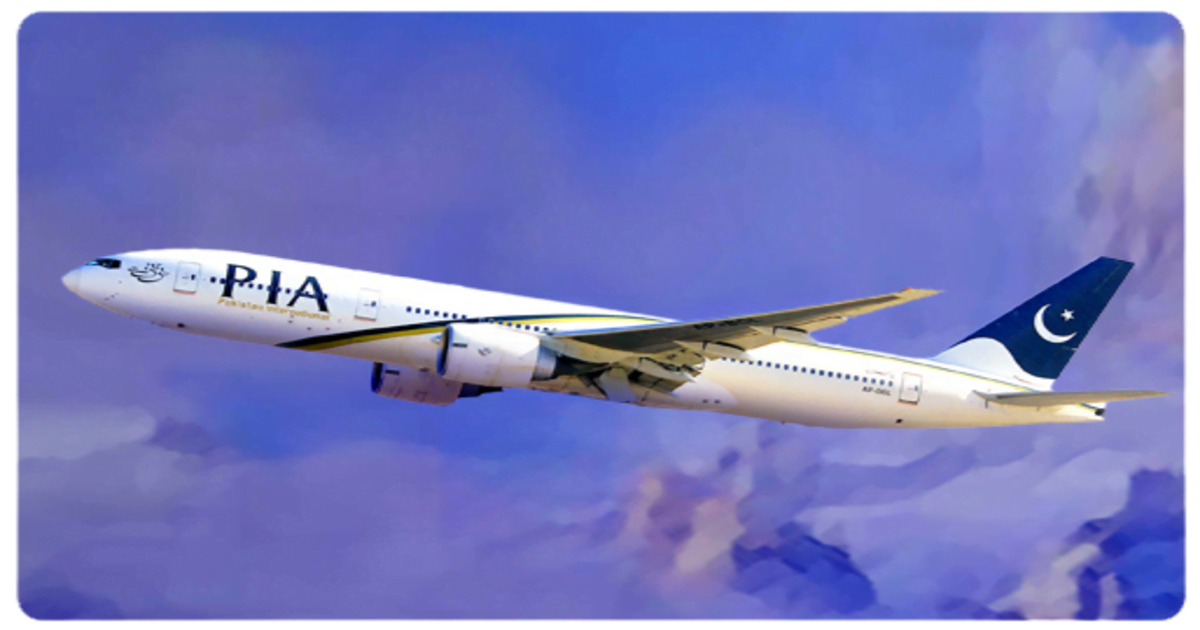
A Historic Sale Marks the End of an Era
After more than seventy years as Pakistan’s national flag carrier, Pakistan International Airlines PIA has been partially privatized through a landmark transaction. A 75 percent majority stake has been sold for $482 million to a private consortium led by Arif Habib Limited, ending decades of financial decline and repeated reform failures.
The auction has been described as historic because it has closed a chapter defined by state control, mounting losses, and political resistance. At the same time, a new chapter has been opened, where private capital, military-linked investment, and market-driven management are expected to reshape the airline’s future.
This development has been presented by the government as a breakthrough achievement. However, intense debate has been triggered across political, economic, and public circles. Questions have been raised about transparency, valuation, and the military’s indirect role. Nevertheless, the transaction has been defended as unavoidable under Pakistan’s current economic realities.
Through this sale, Pakistan’s aviation sector has been placed at a critical crossroads, where reform, accountability, and competition are expected to redefine national air travel.
How the $482 Million PIA Sale Was Finalized
The privatization process was completed through a publicly televised auction held in Islamabad. Bidding was conducted in a packed five-star hotel, lasting nearly ninety minutes and attracting nationwide attention. Three bidders initially participated, each submitting offers for a 75 percent stake in the airline.
To make the deal attractive, PIA had been restructured in advance. Long-term liabilities worth more than $2.3 billion were shifted into a separate entity. In addition, tax relief measures and policy continuity guarantees were approved, with backing from the International Monetary Fund (IMF).
During the first round, Air Blue was disqualified after submitting an offer significantly below the government’s minimum price. The remaining two consortia crossed the required floor, allowing open bidding to proceed. Ultimately, the Arif Habib Limited–led consortium emerged victorious with a final offer of $482 million.
According to official statements, nearly 92.5 percent of the bid value, approximately $446 million, will be reinvested directly into PIA. The remaining amount will be received by the government in cash. Additionally, the state will retain a 25 percent minority stake, valued at around $160 million.
This structure has been described as unconventional. However, it has been justified as a mechanism designed to revive operations rather than generate immediate fiscal gain.
Why PIA Was Forced Toward Privatization
PIA was once regarded as one of Asia’s most respected airlines. Founded in 1955 with just thirteen aircraft, rapid expansion was achieved within its early decades. International routes were launched across Europe, the Middle East, and Asia. Notably, PIA became the first Asian airline to operate a jet aircraft, the Boeing 707.
Over time, however, mismanagement, political interference, and overstaffing eroded its performance. Financial discipline was weakened, while operational efficiency declined steadily. Successive governments attempted reform, yet meaningful restructuring was repeatedly delayed.
Between 2015 and 2024, liabilities exceeding $1.7 billion were accumulated. When long-term obligations were included, total debt crossed $2.3 billion. Meanwhile, fleet utilization fell sharply. Out of thirty-three aircraft, only eighteen remained operational.
Market share erosion was also experienced. Once commanding nearly 60 percent of domestic travel, PIA’s share declined to around 30 percent, as private airlines expanded aggressively.
The crisis deepened further in 2020, when a tragic crash in Karachi claimed ninety-seven lives. Subsequent investigations revealed severe safety lapses, including allegations of questionable pilot licenses. As a result, bans were imposed by the European Union and the United Kingdom, cutting off critical international revenue streams.
Under these conditions, privatization was presented as the only viable path to survival rather than an ideological preference.
IMF Pressure and Economic Compulsions
Pakistan’s broader economic distress has played a decisive role in the airline’s fate. Under a $7 billion IMF loan program, the government committed to reforming or offloading loss-making state-owned enterprises. PIA was consistently highlighted as one of the largest fiscal drains.
IMF-backed reforms emphasized reducing subsidies, limiting government exposure, and encouraging private sector participation. Consequently, PIA’s privatization was placed under strict timelines, with completion required by the end of 2025.
Previous attempts had failed due to unrealistic pricing, political resistance, and labor unrest. In October 2024, an earlier bid collapsed when only $36 million was offered against a much higher government valuation. Lessons from that failure were incorporated into the current process, including liability separation and investor incentives.
This time, international lenders were reportedly satisfied, viewing the transaction as a signal of reform credibility.
Who Controls the Winning Consortium
The successful consortium has been led by Arif Habib Limited, a Karachi-based financial services firm with deep roots in Pakistan’s capital markets. Arif Habib himself has previously served on the Privatisation Commission, giving him institutional familiarity with such transactions.
Other consortium members include AKD Group Holdings, Fatima Fertilizer, City Schools, and Lake City Holdings. Each partner brings diversified experience across finance, education, manufacturing, and real estate.
After the auction, Fauji Fertilizer Company Limited (FFC) also joined the consortium. FFC is publicly listed but remains majority-owned by the Fauji Foundation, a military-run welfare organization. Its inclusion has attracted considerable attention, as it effectively links Pakistan’s most powerful institution to the airline’s future.
Supporters argue that FFC’s presence ensures stability and investor confidence. Critics counter that it blurs the line between privatization and continued state influence. Regardless, the consortium’s composition reflects a blend of private enterprise and institutional power rarely seen in Pakistan’s aviation sector.

Political Backlash and Public Criticism
Despite government celebrations, the deal has faced strong opposition. Several political parties have condemned the transaction, arguing that a national asset has been transferred without adequate public mandate or parliamentary oversight.
The Tehreek Tahafuz Ayeen-i-Pakistan, led by the Pakistan Tehreek-e-Insaf, rejected the privatization outright. Concerns were raised about constitutional legitimacy, transparency, and long-term sovereignty over strategic infrastructure.
Some analysts have criticized the financial structure, claiming that the airline was effectively sold for only $36 million in cash, since most of the investment flows back into PIA itself. This argument has been firmly rejected by government officials, who emphasize total valuation rather than immediate cash receipts.
Independent economists, however, have largely described the deal as pragmatic. They argue that PIA’s continued operation under state ownership would have resulted in escalating losses, while closure would have destroyed valuable international rights and infrastructure.
The Military Factor and Strategic Implications
The entry of Fauji Fertilizer Company has intensified debate about military involvement in Pakistan’s economy. Historically, military-run enterprises have been shielded from political interference and have demonstrated stronger governance than civilian state-owned entities.
Supporters suggest that this could benefit PIA, ensuring professional management and long-term stability. However, critics warn that effective control may simply shift from one arm of the state to another, limiting true market competition.
Concerns have also been raised about aviation market dominance. With strong capital backing and institutional influence, PIA could potentially crowd out smaller private airlines. Regulatory oversight will therefore be crucial to maintaining fair competition.
Nevertheless, analysts emphasize that PIA’s primary opportunity lies in international markets, where competition is global rather than domestic.
What the PIA Sale Means for Pakistan’s Aviation Future
The privatization of PIA has been framed as a necessary gamble rather than a guaranteed success. If capital infusion is managed effectively, fleet renewal, route expansion, and service improvements could restore competitiveness.
Landing rights across 78 destinations and access to 170 airport slots remain valuable assets. With professional management, these advantages could finally be leveraged. Additionally, the lifting of European and UK bans has reopened lucrative corridors.
However, risks remain substantial. Labor relations, governance transparency, and regulatory balance will determine outcomes. The government’s retained minority stake suggests continued involvement, making complete disengagement unlikely.
Ultimately, this transaction represents a decisive shift in Pakistan’s economic policy mindset. Loss-making national pride symbols are no longer being preserved at any cost. Instead, survival through partnership has been prioritized.
Whether this transformation succeeds will define not only PIA’s future but also the credibility of Pakistan’s broader privatization agenda.
Conclusion: A Turning Point with Lasting Consequences
The sale of Pakistan International Airlines for $482 million has marked one of the most consequential economic decisions in recent years. An airline once synonymous with national prestige has been repositioned as a commercial entity fighting for relevance in a competitive global industry.
While controversy continues, the reality remains clear. Under state ownership, collapse appeared inevitable. Through privatization, at least a path toward revival has been created.
The coming years will determine whether this bold experiment delivers efficiency, accountability, and growth—or whether it becomes another contested chapter in Pakistan’s complex political economy.
