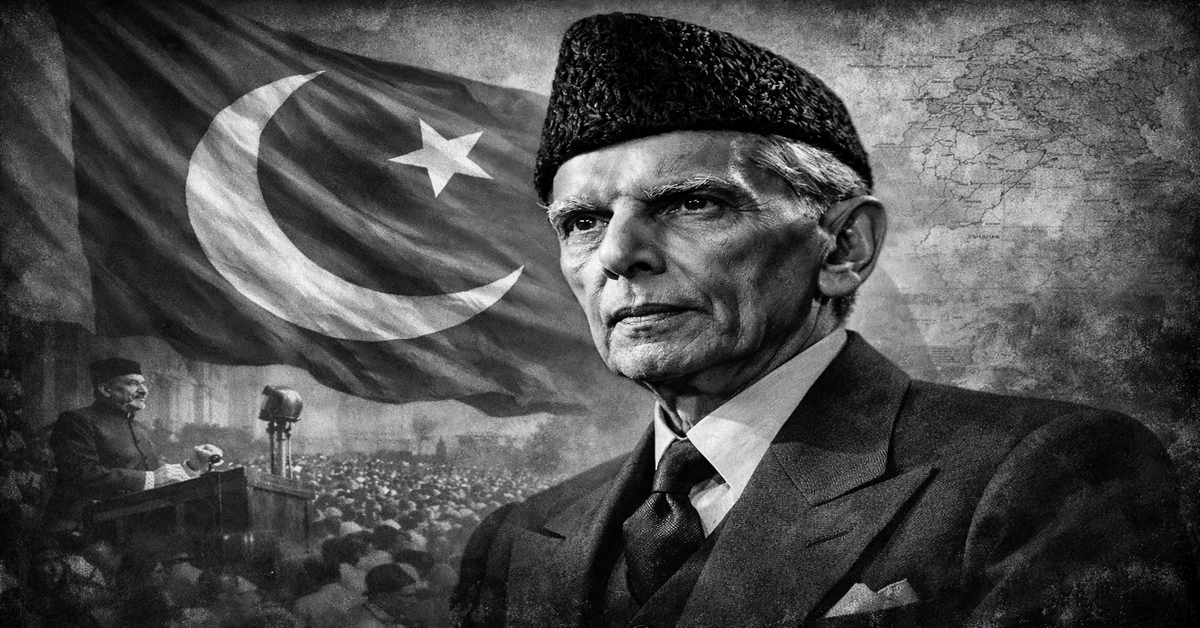
Pakistan’s 149th birth anniversary celebrations of Quaid-i-Azam Mohammad Ali Jinnah were observed nationwide with solemn respect, unity, and renewed national purpose. Across the country, civil and military leadership highlighted the Founder’s timeless vision of a sovereign, democratic, and inclusive state. Through official ceremonies, heartfelt messages, and national reflection, the ideals of faith, unity, and discipline were once again placed at the center of Pakistan’s collective journey.
This historic day was marked not merely as a ceremonial occasion, but as an opportunity for deep introspection. The life, struggle, and principles of Quaid-i-Azam were revisited in detail, ensuring that his message remained relevant for present and future generations. As Pakistan continues to face evolving political, economic, and social challenges, his vision was reaffirmed as the most reliable guiding framework for national stability and progress.
National Ceremonies Honoring the Founder of Pakistan
The day commenced with solemn and dignified state ceremonies across the country. In Islamabad, a 31-gun salute was presented, symbolizing respect for the Father of the Nation. Simultaneously, 21-gun salutes were conducted in provincial capitals, reinforcing a shared national reverence. These ceremonial tributes were observed in a disciplined and orderly manner, reflecting the values emphasized by Quaid-i-Azam himself.
Special prayers were offered in mosques after Fajr prayers nationwide. These prayers were dedicated to Quaid-i-Azam’s soul, along with collective supplications for peace, prosperity, and development of Pakistan. Religious harmony and unity were emphasized through these gatherings, demonstrating the inclusive spirit envisioned at the country’s founding.
A change of guard ceremony was also held at Mazar-i-Quaid in Karachi. This ceremony was conducted with traditional military precision and respect. The event symbolized continuity, discipline, and loyalty to the ideals upon which Pakistan was established. Citizens and officials alike paid homage at the mausoleum, reinforcing a sense of shared national identity.
Through these nationwide observances, Quaid-i-Azam’s presence was felt symbolically in every corner of the country. His legacy was not only remembered but actively honored through action, prayer, and unity.
Prime Minister’s Message on Democracy and Constitutionalism
In an official message, Prime Minister Shehbaz Sharif described the birth anniversary as a moment of collective reflection. The nation was urged to renew its commitment to Quaid-i-Azam’s guiding principles, including democracy, constitutionalism, social justice, and religious harmony. These principles were described as essential pillars of a welfare state rooted in equality and rule of law.
Quaid-i-Azam was recognized as a visionary leader and a statesman of global stature. His political wisdom and unwavering resolve were highlighted as decisive factors that altered the course of history. Through a selfless and disciplined struggle, an independent homeland for Muslims of the subcontinent was achieved.
The Prime Minister emphasized that the ideals of faith, unity, and discipline remained the foundation of Pakistan’s national strength. These ideals were described as a guiding light for future generations navigating modern challenges. According to the message, national progress could only be sustained by adherence to constitutional governance and democratic values.
The statement concluded with a reaffirmation of collective resolve. The nation’s leadership expressed commitment to follow in Quaid-i-Azam’s footsteps. His enduring legacy was pledged to be carried forward in service of Pakistan’s honor, security, progress, and prosperity.
Presidential Emphasis on Unity and Inclusive Ideals
President Asif Ali Zardari also paid tribute to Quaid-i-Azam Mohammad Ali Jinnah, emphasizing the enduring relevance of his leadership. The nation was urged to renew its dedication to the democratic and inclusive ideals laid down by the Founder of Pakistan.
In a formal statement, Quaid-i-Azam’s conviction, perseverance, and tireless efforts were described as the foundation upon which Pakistan was built. His principles of democracy, justice, and equality were highlighted as central to the country’s national journey. These values were urged to continue shaping institutions and decision-making processes.
The President reiterated that Quaid-i-Azam’s call for unity, faith, and discipline provided a clear and practical direction. These principles were identified as essential for social cohesion, national confidence, and sustainable development. Without unity and discipline, progress was described as incomplete and fragile.
Special emphasis was placed on the role of youth. Young Pakistanis were encouraged to uphold Quaid-i-Azam’s ideals and contribute actively toward building a peaceful, inclusive, and forward-looking Pakistan. Through education, civic responsibility, and integrity, the younger generation was identified as the custodian of his legacy.
The President also referred to the upcoming 150th birth anniversary of Quaid-i-Azam. It was announced that 2026 would be declared the “Year of Quaid-i-Azam,” providing an opportunity for meaningful national reflection. This milestone was described as a chance to pass on his ideals to future generations with honesty and purpose.

Inclusive Vision Highlighted by Civil Leadership
Deputy Prime Minister and Foreign Minister Ishaq Dar also addressed the nation through a video message. The coincidence of Quaid-i-Azam’s birth anniversary and Christmas was highlighted as a powerful symbol of Pakistan’s inclusive vision. This shared observance was described as reflective of the moral and constitutional foundations upon which Pakistan was established.
Quaid-i-Azam was described not only as the architect of independence, but also as a statesman of unwavering principles. His clarity of thought and commitment to justice were emphasized as defining characteristics of his leadership. Pakistan, according to this vision, was meant to function as a democratic state grounded in equality and fundamental rights.
The protection of minority rights, religious freedom, and equal citizenship was reaffirmed as a cornerstone of Pakistan’s Constitution. These principles were described as living commitments rather than symbolic statements. National cohesion was linked directly to respect for diversity and constitutional guarantees.
Through this message, Quaid-i-Azam’s vision was reinforced as inclusive, balanced, and forward-looking. His understanding of coexistence and equality was presented as highly relevant in today’s interconnected world.
Military Leadership’s Tribute to Quaid-i-Azam
Pakistan’s military leadership also paid rich tribute to Quaid-i-Azam Mohammad Ali Jinnah. A formal statement was released by Inter-Services Public Relations, highlighting the respect and commitment of the armed forces to the Founder’s vision.
Tributes were paid by Chief of Defence Forces and Army Staff Field Marshal Asim Munir, Chief of Naval Staff Admiral Naveed Ashraf, and Chief of Air Staff Air Chief Marshal Zaheer Ahmed Baber Sidhu. Quaid-i-Azam’s exemplary leadership and steadfast resolve were described as enduring sources of guidance.
The armed forces reaffirmed their unwavering commitment to a strong, sovereign, democratic, and prosperous Pakistan. The principles of faith, unity, and discipline were highlighted as the moral foundation of military service and national defense.
It was emphasized that constitutionalism and national unity continued to guide the armed forces in confronting contemporary challenges. The protection of sovereignty and territorial integrity was reiterated as a sacred responsibility aligned with Quaid-i-Azam’s aspirations.
The statement concluded with a pledge of honor, courage, and devotion. Pakistan’s armed forces reaffirmed their resolve to serve the nation wholeheartedly while upholding the legacy of Quaid-i-Azam Muhammad Ali Jinnah.
Enduring Relevance of Quaid-i-Azam’s Vision
As Pakistan marked the 149th birth anniversary of its Founder, a consistent theme emerged across all messages and ceremonies. Quaid-i-Azam’s vision was presented not as a historical memory, but as a living framework for governance, unity, and national purpose.
His emphasis on democracy, constitutionalism, equality, and social justice was repeatedly highlighted as essential for addressing present challenges. Political stability, economic resilience, and social harmony were all linked to adherence to his principles.
The celebration served as a reminder that national strength lies in unity and discipline. Through collective effort and moral clarity, the ideals upon which Pakistan was founded can continue to guide the nation forward.
With the declaration of 2026 as the “Year of Quaid-i-Azam,” a renewed opportunity has been created. His life, struggle, and vision are expected to be revisited in depth, ensuring that future generations remain connected to the foundational values of Pakistan.
In honoring Quaid-i-Azam Mohammad Ali Jinnah, Pakistan reaffirmed its commitment to sovereignty, inclusivity, and democratic progress. His legacy remains deeply woven into the national consciousness, guiding the country toward a more just, united, and prosperous future.
